



















For many B2B organisations, the Marketo Salesforce integration is both essential and frustrating. Done well, it fuels sales and marketing alignment, improves lead quality, and accelerates pipeline velocity. Done poorly, it creates duplicate data, sync errors, and reporting blind spots. This article explores what senior marketers need to know – from common pitfalls to proven frameworks – to unlock full value from your integration.
TL;DR
- Marketo–Salesforce integration is critical for pipeline visibility and lead management.
- Common mistakes include over-engineering sync rules, ignoring governance, and failing to align definitions of MQL/SQL.
- A structured framework can reduce sync errors, improve reporting, and boost conversion rates.
- Real-world benchmarks show well-governed integrations accelerate revenue velocity by up to 20%.
- Practical next steps: audit your sync settings, align lifecycle definitions, and invest in governance.
Why the Marketo Salesforce Integration Matters Now
The marketing automation landscape is shifting and buyers are demanding more personalised experiences, however sales teams still need visibility into lead engagement data to prioritise outreach. Without a clean, reliable sync between Marketo and Salesforce, marketers risk losing trust with sales and underreporting their true revenue impact.
According to recent Gartner research, 60% of CMOs identify CRM-MAP integration as one of their top three challenges. Meanwhile, with budgets under increasing scrutiny, senior leaders can no longer afford to settle for “good enough” integrations. Instead, what’s needed is a robust, well-governed connection that not only delivers shared visibility and accurate reporting, but also enables scalable growth.
Common Challenges and Mistakes
Even experienced teams stumble on familiar pitfalls:
- Over-complicated field mapping: Syncing every field creates unnecessary noise and slows processing.
- Misaligned lifecycle definitions: If sales and marketing disagree on what qualifies as an MQL, your funnel reports will never align.
- Duplicate management blind spots: Salesforce often has better dedupe controls than Marketo; and failing to coordinate rules leads to duplication.
- Governance gaps: Lack of clear ownership results in “shadow admins” making changes that break integrations.
These issues don’t just frustrate admins, they erode executive trust in marketing’s numbers.
A Proven Approach to Integration
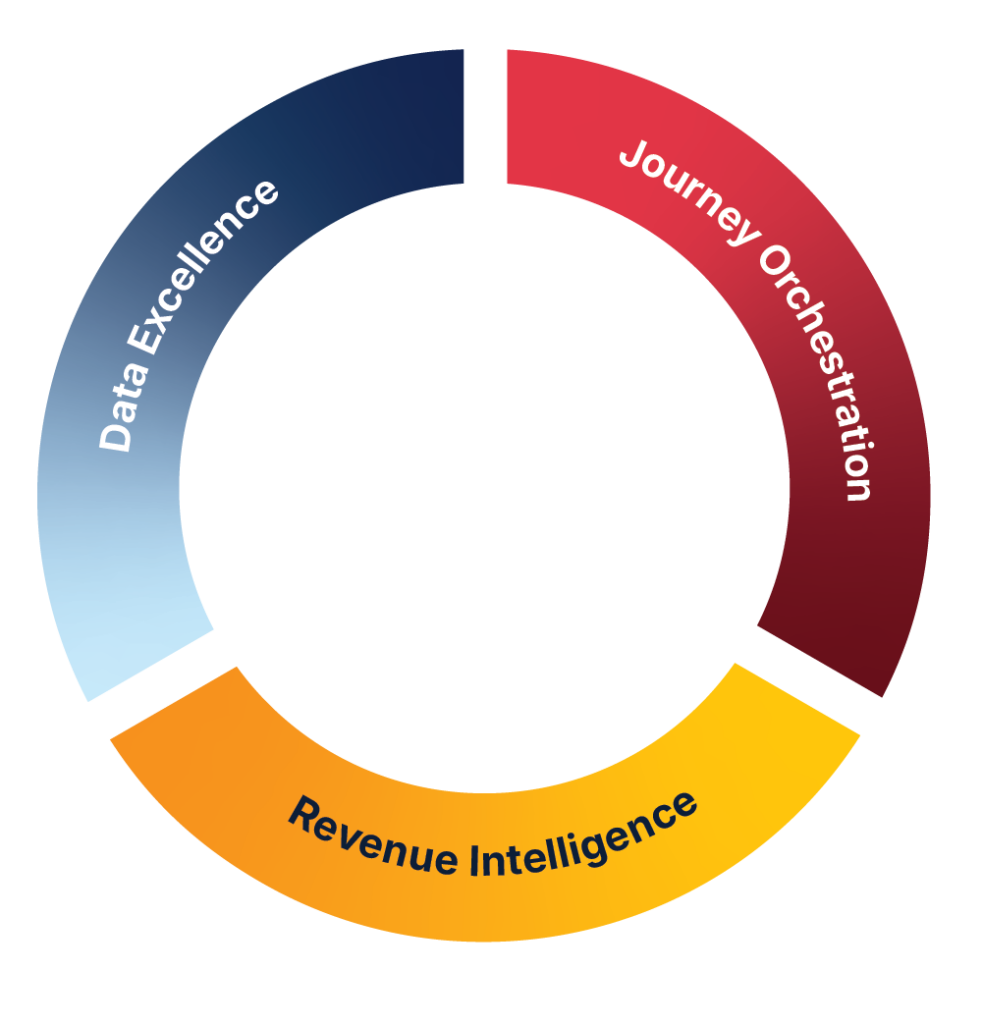
At JTF, we frame every marketing automation challenge – including the Marketo Salesforce integration – through our Revenue Acceleration Loop. This model connects data, orchestration, and intelligence to drive measurable revenue growth. Applied to integration projects, it creates a repeatable, value-driven framework:
- Data Excellence – Audit Salesforce and Marketo data syncs. Identify which fields matter for revenue attribution, rationalise mappings, and enforce deduplication to build a clean foundation.
- Journey Orchestration – Align lifecycle stages between marketing and sales. Define clear MQL/SQL criteria, handoff rules, and SLA expectations so leads move seamlessly across the funnel.
- Revenue Intelligence – Implement reporting and dashboards that measure the commercial impact of the integration: lead velocity, pipeline contribution, and ROI attribution. Use these insights to refine decision-making.
When these elements work in harmony, your integration stops being a technical bridge and becomes a growth engine, giving executives the confidence that marketing automation is fuelling measurable revenue outcomes.

GET MORE FROM YOUR MARKETO SALESFORCE INTEGRATION
Marketo Hacks for Salesforce CRM Success
This checklist will help you:
- How to fix sync errors fast-without raising a single IT ticket.
- A smarter approach to Salesforce deduplication using rules-based automation.
- Quick wins to improve Marketo Sales Insight visibility and sales engagement.
- How to reduce Salesforce Marketo sync backlogs with smart object management.
- Field management tips to prevent duplicates and permission issues.
- The role of AI in driving cleaner data, faster follow-ups, and better MROI.
Real-World Results and Benchmarks
One global B2B client approached us with a 15% sync error rate and ongoing friction between sales and marketing. However, by rationalising field syncs and aligning lifecycle definitions, we were able to reduce error rates to below 1%. As a result, pipeline velocity improved by 18% – all within a single quarter.
Benchmarks from Adobe show that organisations with well-governed integrations achieve:
- 20% faster lead-to-opportunity conversion
- 25% more accurate revenue attribution
- Higher adoption of CRM among sales reps
These are not small wins, they directly impact growth, efficiency, and credibility at board level.
Next Steps for Marketing Leaders
Senior marketers don’t need to become system admins, however they do need to drive alignment. Here’s where to start:
- Run a joint audit with sales ops to identify sync pain points.
- Define shared lifecycle stages and document them.
- Reduce noise by syncing only fields that matter for revenue.
- Set up a governance model for changes to the integration.
- Use reporting to tell a commercial story, not just an operational one.
For a deeper dive, watch our webinar: Maximizing your Marketo and Salesforce Integration
Frequently Asked Questions:
The most common challenge is managing data quality across both systems. Duplicate records, misaligned lifecycle stages, and over-engineered field syncs often cause reporting discrepancies and erode sales confidence.
At least quarterly. Regular audits ensure sync rules, field mappings, and lifecycle definitions still align with changing business needs, especially if your sales or marketing teams have changed processes.
By default, Marketo deduplicates on email address only, which can be limiting. Many organisations choose to implement additional dedupe logic or use Salesforce’s more robust rules for better control.
Only the fields that matter for lead management, reporting, and revenue attribution. Syncing every field creates noise and slows performance. A good rule of thumb is “less is more”, focus on fields that drive business value.
Track metrics like lead-to-opportunity conversion rates, pipeline velocity, and marketing-sourced revenue. With proper governance, integrations can reduce sync errors, improve attribution accuracy, and demonstrate clear revenue impact. Check out our reporting handbook for more tips.
Not necessarily. Most sync settings can be managed by marketing or sales operations. Although complex deduplication rules, governance models, or multi-system integrations may require IT involvement.
Start with an audit: review error logs, identify misaligned lifecycle definitions, and map which fields are truly business-critical. Then move towards alignment and governance, avoid quick fixes that don’t address root causes.
Yes. Marketo-Salesforce remains the backbone for lead management and pipeline reporting. Tools like Adobe RT-CDP enhance the picture by unifying profiles and data across more channels, but they don’t replace the CRM-MAP connection.
Conclusion
The Marketo-Salesforce integration is more than a technical connection; in fact, it serves as the backbone of sales and marketing alignment. When senior leaders approach it strategically, they not only unlock cleaner data, but also foster stronger collaboration and ultimately drive measurable revenue gains.