




















Why Predictable Revenue Still Feels Elusive
You’re almost a month into the new year and your CFO has asked the question again: “How much revenue will marketing deliver this year?”
Not “How many leads?” Not “What’s our engagement rate?” Revenue. A number you can defend.
For most CMOs, this conversation feels like Groundhog Day. You know marketing drives revenue. You can point to campaigns that worked. But when asked to connect activity to outcomes with the precision finance demands? That’s where the story falls apart.
The problem isn’t your effort. It’s your operating model.
The Core Problem: Marketing Activity Without Revenue Confidence
Despite years of digital transformation, senior marketing leaders continue to face two persistent challenges:
- Inability to prove marketing’s direct contribution to revenue
- Lack of a systematic, repeatable approach to growth
Most organizations have pieces of a revenue engine:
- Data scattered across systems
- Journeys built campaign by campaign
- Dashboards reporting lagging indicators
Let’s be honest about what most marketing organizations are actually defending: vanity metrics.
Open rates that don’t correlate to pipeline. MQLs that sales ignore. Content downloads that don’t predict buying behavior. Engagement scores that make great slides but terrible budget justifications.
These aren’t measures of revenue contribution. They’re measures of activity. And in 2026, when your CFO asks for your revenue number, activity metrics won’t save your budget.
The Campaign-Centric Operating Model Is Dead
Its because most marketing teams operate with a model designed for a different era. One where marketing’s job was “awareness” and “lead generation,” not revenue ownership.
That model had:
- Campaign calendars built for marketing’s convenience, not buyer behavior
- Individual lead scoring when modern B2B involves 6-10 stakeholders
- Channel optimization that ignores cross-channel influence
- Attribution approaches designed for 90-day sales cycles, not 18-month committee decisions
- Engagement metrics when CFOs demand revenue outcomes
This model worked when buyers followed linear paths. Sales had time to work every lead and digital engagement was novel enough that opens and clicks mattered.
But none of that is true anymore. Yet most organizations are still running playbooks from a decade ago.
Why Linear Funnels Fail Modern B2B
Funnels assume a one-way flow: awareness -> consideration -> decision. But revenue doesn’t work that way. In many cases businesses start with small purchases and grow over time, this means you need a strong brand, with a good reputation and a clear offering. As we know it today, modern B2B buying is:
- Non-linear
- Committee-driven
- Data-informed
A funnel model assumes buyers you’ve never met follow your prescribed path. Reality is messier. And your attribution can’t handle it.
A loop reflects reality and how revenue actually works: insights from revenue performance feedback into better data practices, which enables smarter journeys, and more accurate forecasting. It’s the very nature of test & optimize which many marketers aspire to put in place.
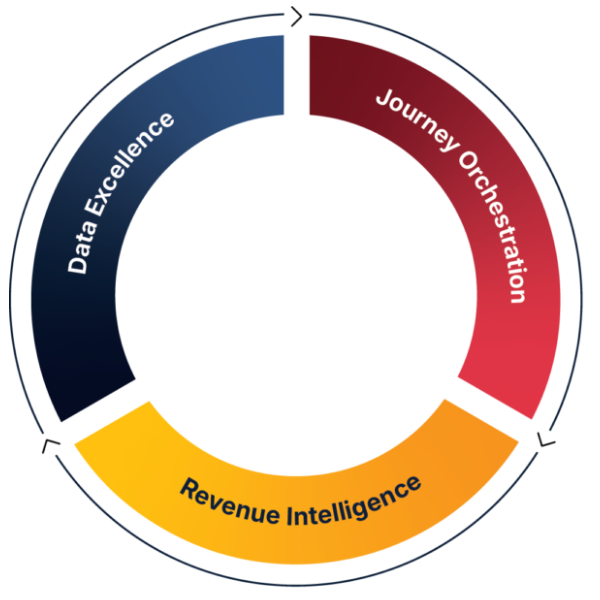
JTF Revenue Acceleration Loop
What “predictable Revenue” actually Requires
Organizations that have solved the attribution problem don’t think in campaigns. They think in systems.
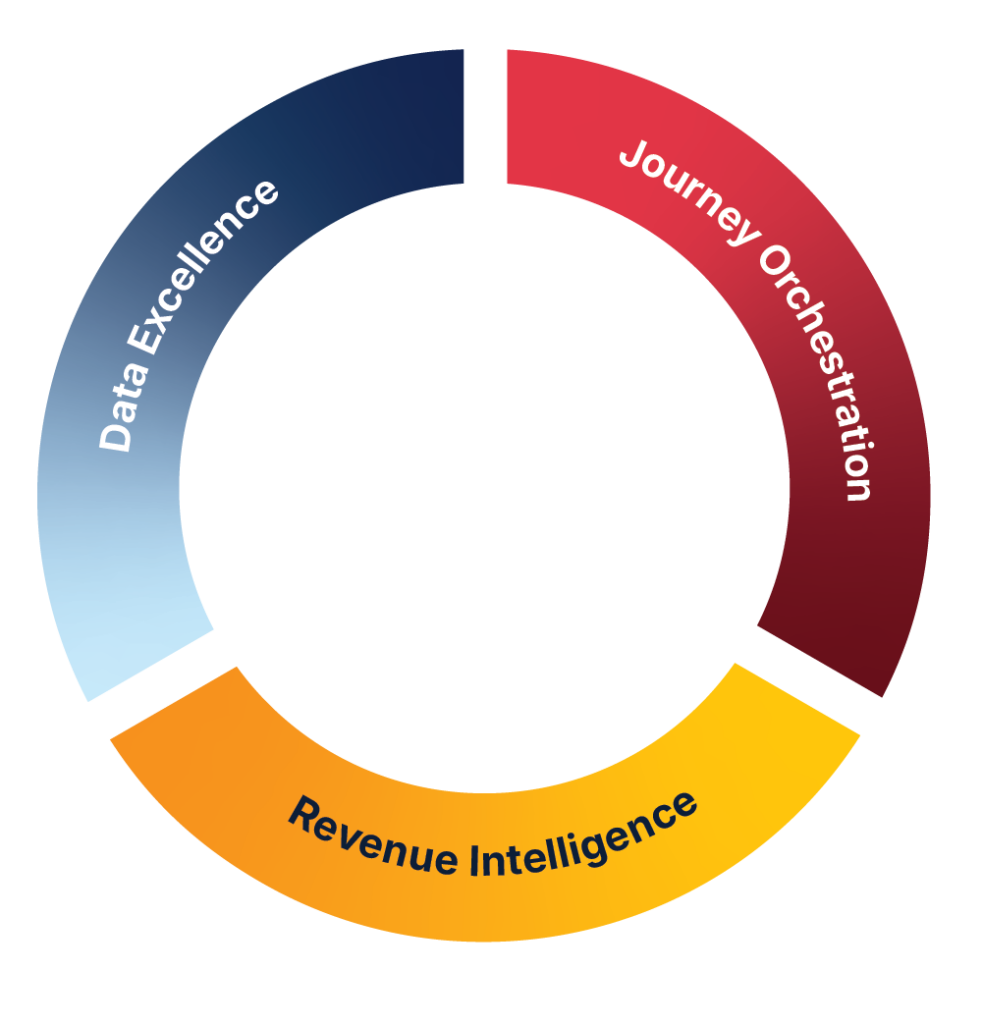
Specifically, a closed-loop operating model where three components continuously reinforce each other.
This isn’t a framework to test alongside your current approaches. It’s the replacement for campaign-centric, activity-based marketing.
It’s how marketing operates when revenue accountability is non-negotiable.
The Three Components of a Revenue-Driven Operating Model
Segment 1: Data Excellence – The Foundation of Predictable Revenue
What Data Excellence Really Means
Data Excellence is not about having more data. It’s about having reliable, decision-grade data that the entire revenue organization trusts. This includes:
- Clean account and contact hierarchies
- Consistent lifecycle stage definitions
- Unified views of engagement, pipeline, and revenue
Without this foundation, every downstream effort is compromised. You can’t orchestrate journeys you can’t track. You can’t attribute revenue to activities you can’t measure. You can’t answer your CFO’s question without trustworthy data.
Common Pitfalls at This Stage
- Disconnected systems with conflicting metrics
- Manual data cleanup becoming a permanent operating cost
- Sales and marketing debating numbers instead of making decisions
Data Excellence Maturity Model
| Level | Description |
| Ad Hoc | Siloed data, manual reporting, inconsistent definitions |
| Foundational | Shared lifecycle stages, basic governance |
| Advancing | Automated data hygiene, account-level visibility |
| Leading Edge | Data trusted for forecasting and investment decisions |
Real-World Example
A mid-market B2B company struggled to explain why lead volume increased while pipeline stagnated. A data audit revealed a lack of lead quality and inconsistent opportunity attribution. By standardizing data models and governance, the team reduced reporting noise and regained confidence in revenue metrics – unlocking more accurate planning within one quarter.
A question for you: Do you trust your revenue data enough to make budget allocation decisions, or are you still debating definitions in every pipeline review?
Segment 2: Journey Orchestration – Beyond the Campaign Calendar
Journey Orchestration represents a shift from isolated campaigns to intentional customer motion.
Instead of asking:
“What campaign should we run next?”
High-performing teams ask:
“What should the customer do next – and how do we help them do it?”
This isn’t semantic. It’s operational. Campaign thinking optimizes for marketing’s calendar and internal capacity. Journey thinking optimizes for buyer progress and revenue outcomes.
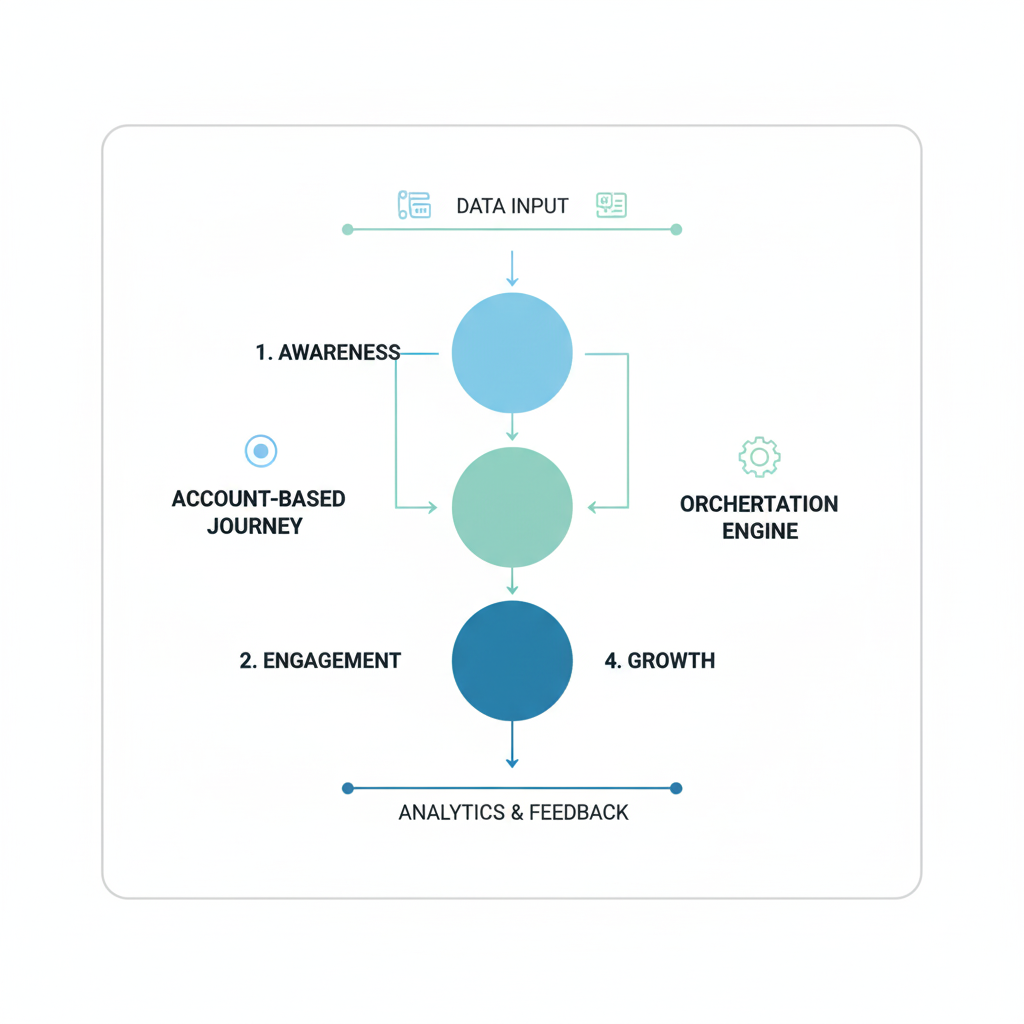
What Effective Orchestration Looks Like
- Journeys aligned to buyer intent, not internal calendars
- Experiences coordinated across teams and channels
- Progress measured by movement, not just engagement
Journey Orchestration Maturity Model
| Level | Description |
| Campaign-Centric | One-off programs, channel silos |
| Segment-Based | Targeted messaging by persona or industry |
| Journey-Based | Multi-step, cross-channel journeys |
| Adaptive | Journeys dynamically respond to behavior and intent |
Real-World Example
A global SaaS provider replaced quarterly campaign launches with always-on account journeys tied to buying signals. Marketing and sales aligned around “next best action” logic from our AI Engagement Summaries solution, reducing sales cycle length and increasing win rates – without increasing spend.
A question for you: Are your customer experiences designed for how people actually buy, or for what’s easiest to execute on your campaign calendar?
Segment 3: Revenue Intelligence – Turning Insight Into Action
Revenue Intelligence is not about dashboards for dashboards’ sake. It’s about making insight operational.
This segment helps leaders answer:
- Which activities actually influence pipeline and revenue?
- Where are deals stalling – and why?
- What should we double down on next quarter?
- How do we allocate budget based on revenue outcomes, not campaign performance?
From Reporting to Decision Support
Reporting tells you what happened. True Revenue Intelligence tells you what to do about it.
This means:
- Connecting engagement data to pipeline and revenue
- Surfacing leading indicators, not just lagging metrics
- Actively informing prioritization across marketing, sales, and RevOps
Revenue Intelligence Maturity Model
| Level | Description |
| Descriptive | Historical, backward-looking reports |
| Diagnostic | Understanding why outcomes occurred |
| Predictive | Forecasting likely revenue outcomes |
| Prescriptive | Recommending actions to improve results |
Real-World Example
An enterprise technology company discovered that mid-funnel interactions were stronger revenue predictors than top-of-funnel lead volume. By reallocating investment based on these insights, marketing proved direct revenue impact and secured increased budget the following year.
A question for you: Can you clearly explain which marketing activities influenced your largest deals last quarter, or do you just know they closed?
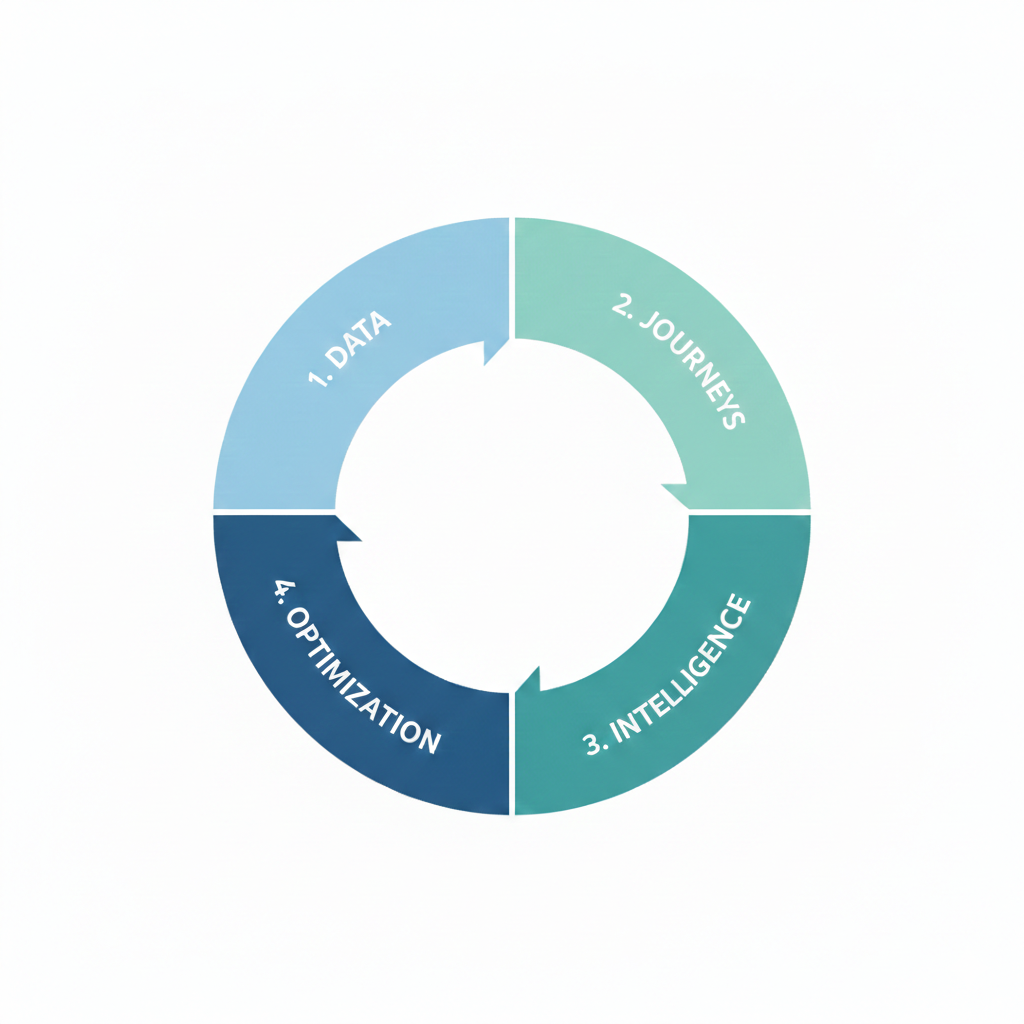
How the Three Segments Reinforce Each Other
Break one segment, and the loop weakens. Strengthen all three, and predictability emerges.
- Data Excellence enables accurate journey design
- Journey Orchestration generates meaningful behavioral signals
- Revenue Intelligence feeds insight back into data and strategy
This is why it’s a loop, not a linear process. Each component makes the others more effective. And the system compounds over time.
Revenue Acceleration Loop: Self-Assessment for Leaders
Before you can build a revenue-driven operating model, you need to be honest about your current state.
Ask yourself these questions:
- Do we trust our revenue data enough to make investment decisions?
- Can we clearly explain how marketing influences pipeline and closed revenue?
- Are customer journeys intentionally designed or built campaign by campaign?
- Do insights from performance actively change future strategy?
If you answered “no” to more than one, the challenge isn’t execution, it’s the operating model.

Insights that matter
Unlock Predictable Growth
Pinpoint revenue leaks
Identify gaps in your data, buyer journeys, and reporting that silently drain pipeline and performance.
You will be scored on 3 critical areas
You’ll be evaluated on Data Excellence, Journey Orchestration, and Revenue Intelligence – three pillars that determine your ability to scale.
Receive tailored next steps
Based on your score, you’ll get personalized next steps to accelerate growth, simplify your tech stack, and align marketing with revenue.
What This Means for CMOs and RevOps Leaders This Year
Predictable revenue is not a reporting problem. It’s a systems problem.
The organizations that outperform this year aren’t the ones with better campaigns. They’re the ones that fundamentally changed how marketing operates. They will:
- Invest in foundations before optimization
- Design for customer motion, not internal activity
- Treat insight as a strategic input, not a post-mortem
- Build systems that learn and compound, not campaigns that launch and hope
Immediate Next Steps to Take This Quarter
You don’t need to transform everything at once. But you do need to start systematically.
- Audit data foundations before launching new initiatives
- Map one core buying journey end-to-end
- Align on a small, trusted set of revenue metrics
- Establish a feedback loop between insights and planning
Start small, but start systematically.
Planning cycles create rare opportunities for operational transformation. Budgets are being allocated right now. Roadmaps are being set. Strategic credibility is being established or eroded.
You can walk into Q2 with the same operating model you’ve had for the past three years, hoping this is the year it finally produces the attribution your CFO demands. Or you can use this moment to change how your marketing organization fundamentally operates.
The technology exists. The operating model exists. The business case is undeniable.
The only question is whether you’ll use this January differently than the last five.
Because your competitors are in the same budget meetings, facing the same questions, feeling the same pressure. Some of them will use this window to transform their operating model.
Some won’t.
Which one will you be?
From Hopeful Growth to Predictable Revenue
The Revenue Acceleration Loop provides a practical path forward for marketing and revenue leaders tired of disconnected efforts and inconclusive results. By uniting Data Excellence, Journey Orchestration, and Revenue Intelligence into a single operating model, organizations can move from activity-driven marketing to revenue-driven growth.
Predictability isn’t about working harder.
It’s about working within a system designed to learn, adapt, and compound results. So, if you’re serious about making 2026 different, start with an honest assessment of where your systems are leaking revenue.
If you want support applying the Revenue Acceleration Loop to your revenue strategy this year, book a marketing operations and revenue consultation to get started.
Frequently Asked Questions
Most teams operate with fragmented data, campaign‑centric processes, and metrics that don’t correlate to revenue. Without unified data, consistent definitions, and closed‑loop intelligence, forecasting becomes guesswork instead of a defensible business commitment.
Campaign‑based models optimize for activity and internal calendars. A revenue engine optimizes for buyer progress, cross‑functional alignment, and measurable revenue outcomes. It replaces isolated campaigns with connected journeys powered by trusted data and real‑time intelligence.
Start by establishing Data Excellence: shared lifecycle definitions, clean account hierarchies, and unified engagement views. Without trustworthy data, journey orchestration and intelligence layers will fail to produce reliable insights or forecasts.
Journey orchestration aligns marketing, sales, and customer teams around what buyers need to do next – not what marketing wants to launch next. This shift increases conversion efficiency, reduces leakage, and creates a consistent experience across channels and stakeholders.
Intelligence closes the loop by turning performance data into actionable insights. It enables predictive forecasting, identifies friction points in journeys, and informs where to invest for the highest revenue impact. It transforms the operating model from reactive to adaptive.